

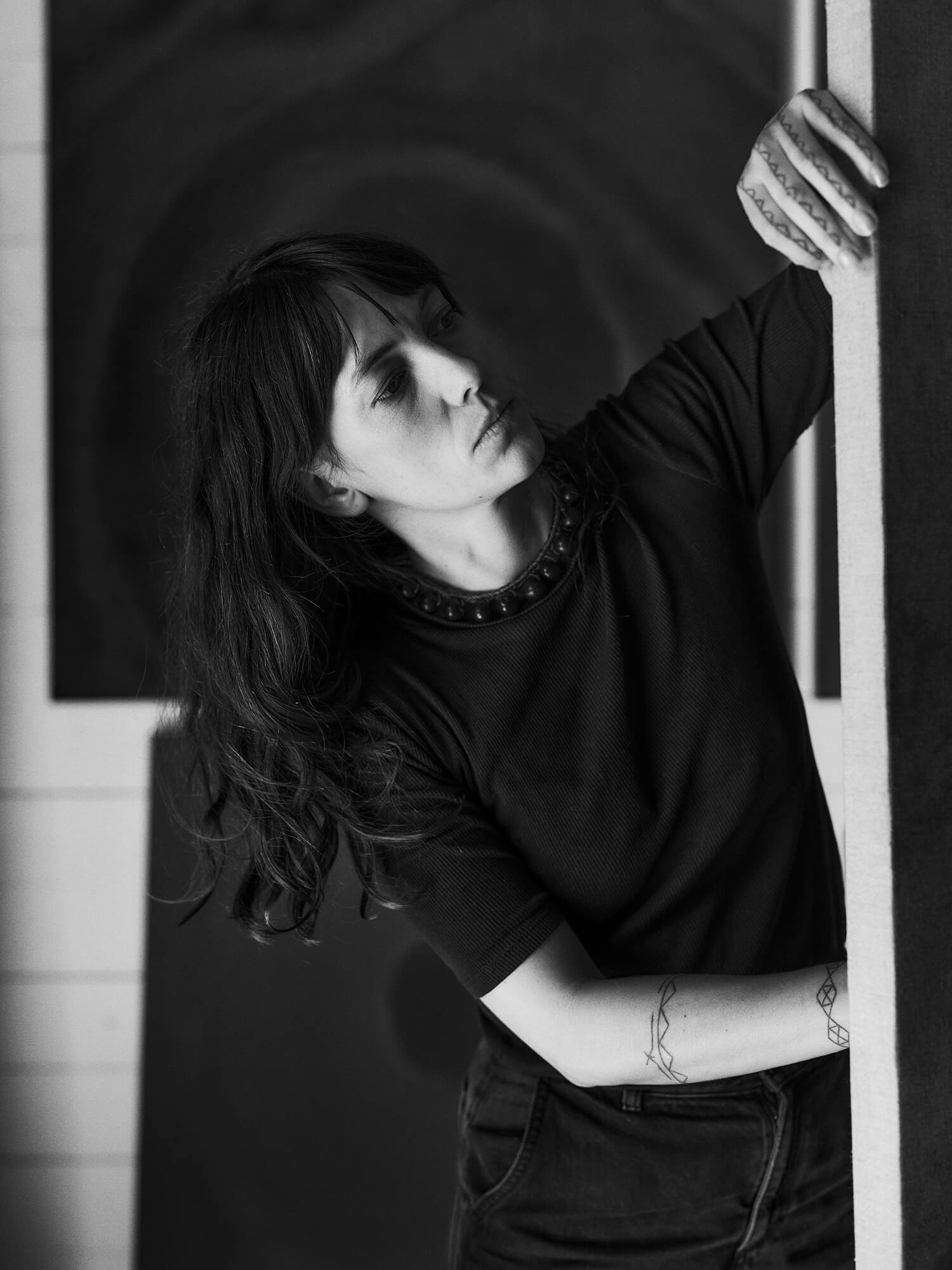
Raukura Turei
From the Ground Up
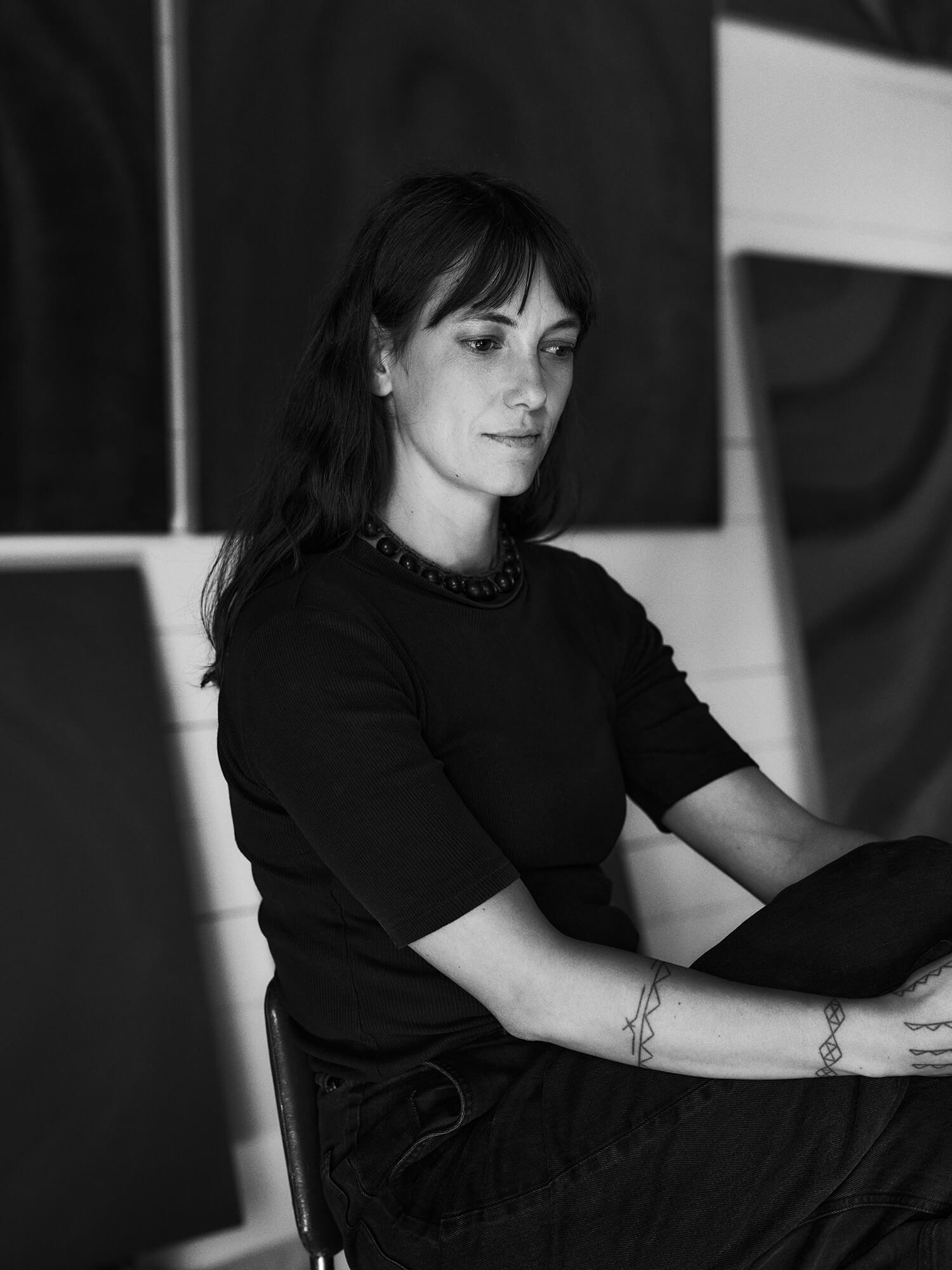
Some journeys begin with discovery.
Others begin with remembering.
For Raukura Turei, the act of making appears inseparable from the act of returning. Returning to whenua. Returning to whakapapa. Returning to the knowledge carried in the body long before it can be fully explained.
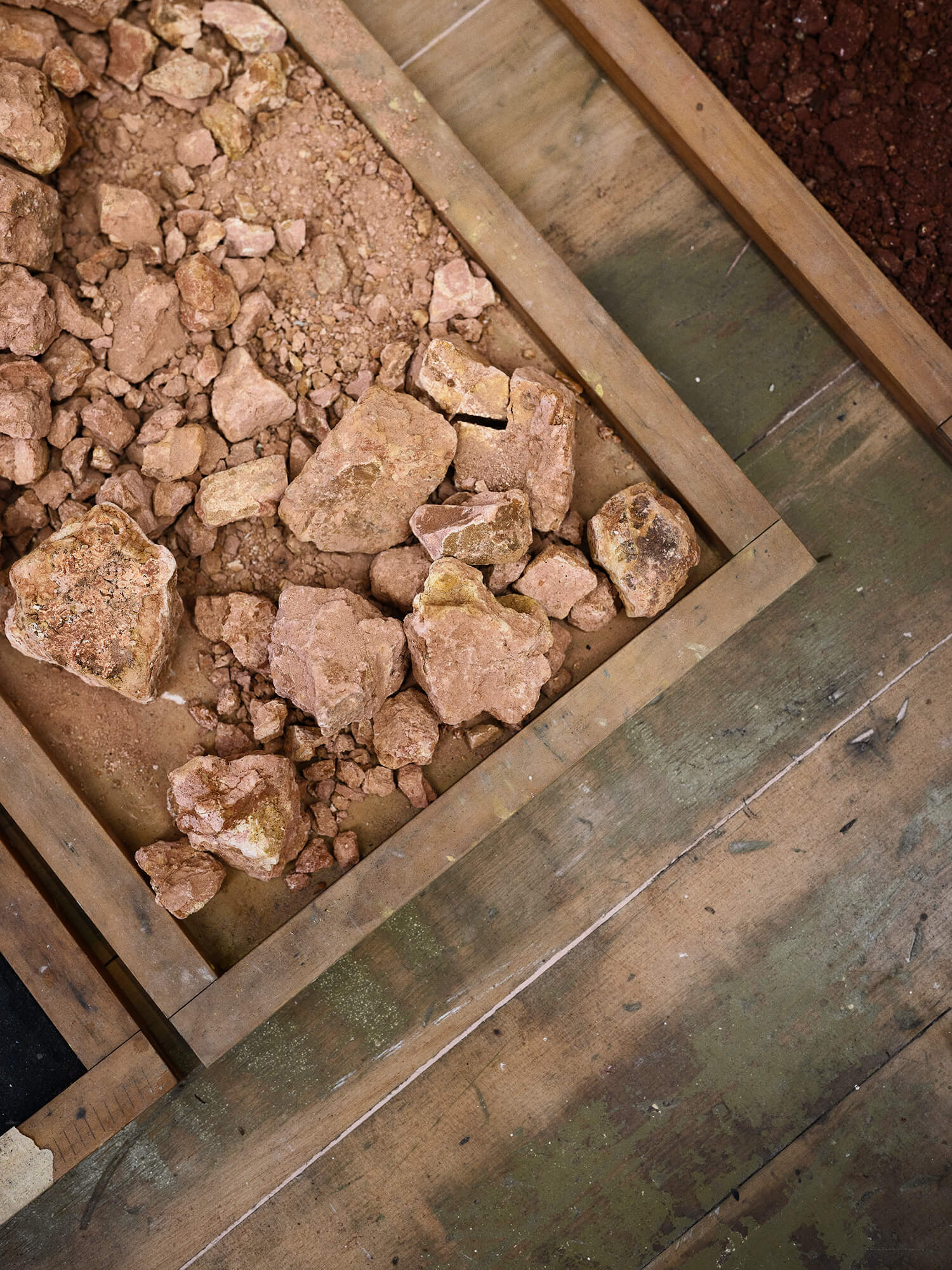
The landscapes that shaped her were never passive backdrops. The black sands of Te Tai o Rehua, the dense ngahere of Te Wao Nui a Tiriwa, the shifting light of the west coast and the stories held within those places continue to move through her work. Not as subjects to be depicted, but as relationships to be maintained. The whenua is not observed from a distance. It is gathered, carried, ground into pigment, mixed into paint, and returned to the surface of her work.
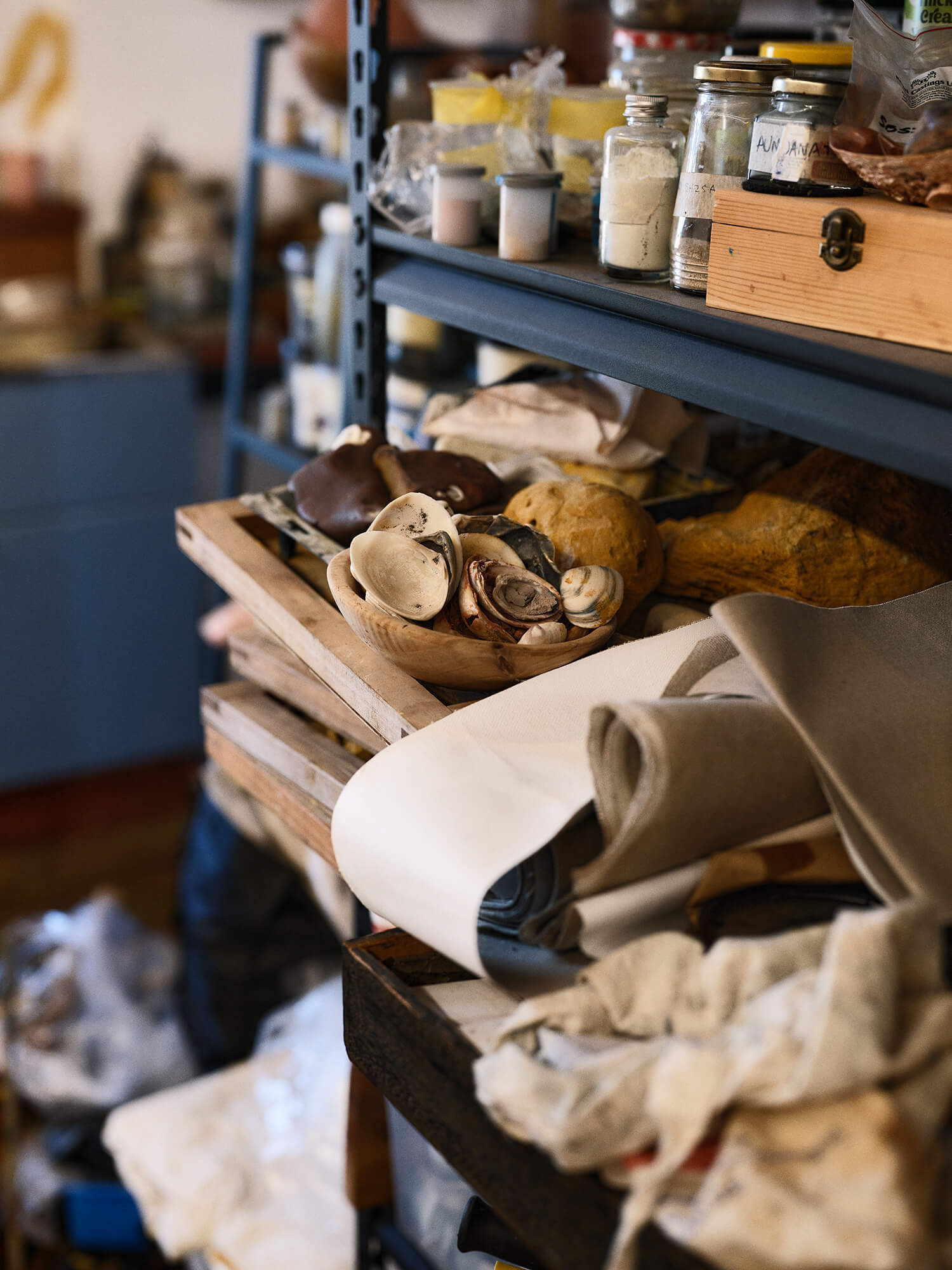
That relationship to material sits at the centre of her practice. Earth pigments, uku, onepū, and aumoana are not simply artistic mediums. They arrive carrying their own histories, textures, and whakapapa. Working with them requires a different kind of attention. One that acknowledges the material not as a resource, but as a relation.
Motherhood deepened that understanding. The responsibility of carrying whakapapa forward sharpened questions that had already been present throughout her life. Questions about belonging, connection, and the obligations we hold to both those who came before us and those who come after. Reconnecting with her marae and whānau became less an act of recovery than an act of continuation. A recognition that some forms of knowledge never disappear entirely. They wait patiently for our return.
While her work moves between architecture and painting, the impulse behind both feels remarkably similar. Each asks how people relate to place. How environments shape experience. How stories become embedded within materials. Whether working at the scale of a building or the surface of a painting, there is a consistent attention to the relationships between people, whenua, memory, and form.
More recently, that exploration has centred on Kurawaka and the potency of atua wāhine. Not as distant figures held safely within mythology, but as living forces whose presence continues to shape contemporary Māori experience. Through colour, texture, scale, and material, her work challenges inherited assumptions and reopens conversations that have too often been softened, simplified, or set aside.
There is a physicality to the way Raukura speaks about creativity. The body remembers. The body processes. The body gathers, carries, makes, and returns. Knowledge emerges not only through thought, but through touch, repetition, intuition, and practice.
Perhaps that is what sits beneath all of this work.
A trust that the things most worth knowing are not always learned for the first time.
Sometimes they are remembered.
Growing up between the Waitākere Ranges and the black-sand shores of Te Henga, what did that landscape do to you before you understood what it was doing?
I grew up in Grey Lynn, but my father grew up in Henderson in foster care and his birth mother and siblings were also in Henderson. I have been told stories of how the West Coast and especially places like Te Henga were very special to my Kuia Dorothy who we never got to meet. My parents would take me and my siblings to Te Henga, Piha, Whatipū and throughout the Waitākere many weekends when we were growing up. It was our collective happy place and where I learnt a lot about the ngahere. Te Uru was the backdrop to many scorching summer days. The whenua was definitely a silent teacher and place of solace, he āhuru, and a place to feel more connected to whānau histories. This is why it has felt second nature to return here in my mahi toi.
Were there textures, colours, sounds from that place that you can trace directly into your work now?
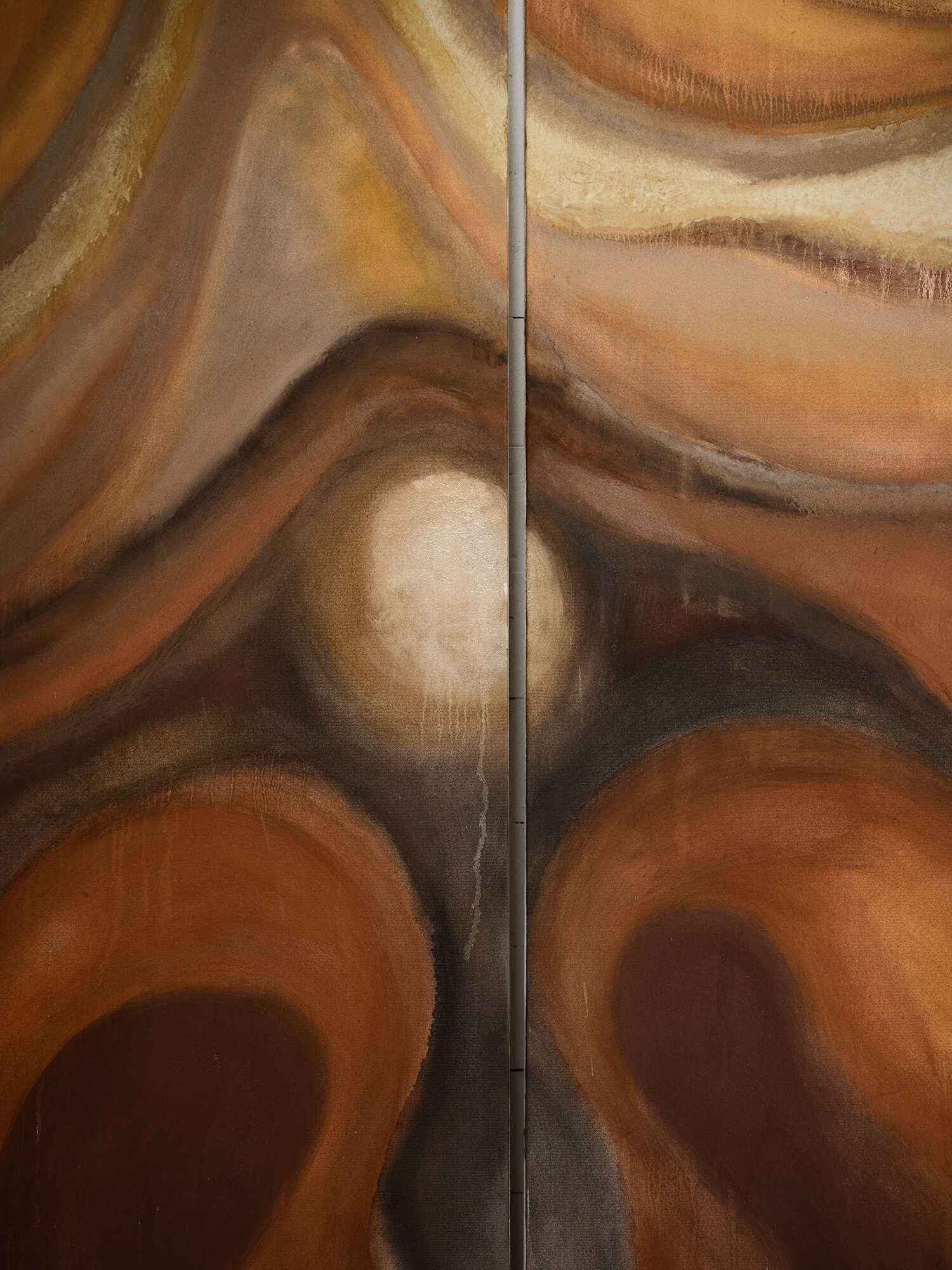
The charge of Te Tai o Rehua, the electricity in the air and pull of the moana are undeniable forces that have translated into my mahi without explicitly intending to. As I collect whenua from these places and work it into mahi toi the whakapapa of the whenua, its colours and textures are literally manifested in the paintings. There is a weight to onepū, black iron sands, that is heavy to carry, physically and spiritually that communicates the weight of what it means for me to use that whenua as a material in my mahi.
Was there someone early on who saw something in you before you saw it in yourself?
Mum would frame and hang my paintings from high school on the walls of our whānau home, and I remember a dear friend of hers Graham Kake telling me while sitting in the whare together that he wanted to buy my artwork. Something in that small gesture has sat with me many years later. My art teachers at Auckland Girls Grammar School (AGGS) were always very encouraging, but I was ultimately led to study architecture over fine art, in part due to a fear of being a poor artist or losing my love of painting if I had to rely on it financially.
What was your relationship to te reo growing up, and when did it stop feeling separate from you?
Te reo has never felt separate from me as I was a tamaiti of Arohanui Kohanga Reo, then the rumaki reo Whānau Ata at Waiatarau Primary and in Kahurangi at AGGS. My māmā made a conscious decision to learn te reo properly when I was born as a lifelong commitment and spoke to me, my brother and later sister at home.
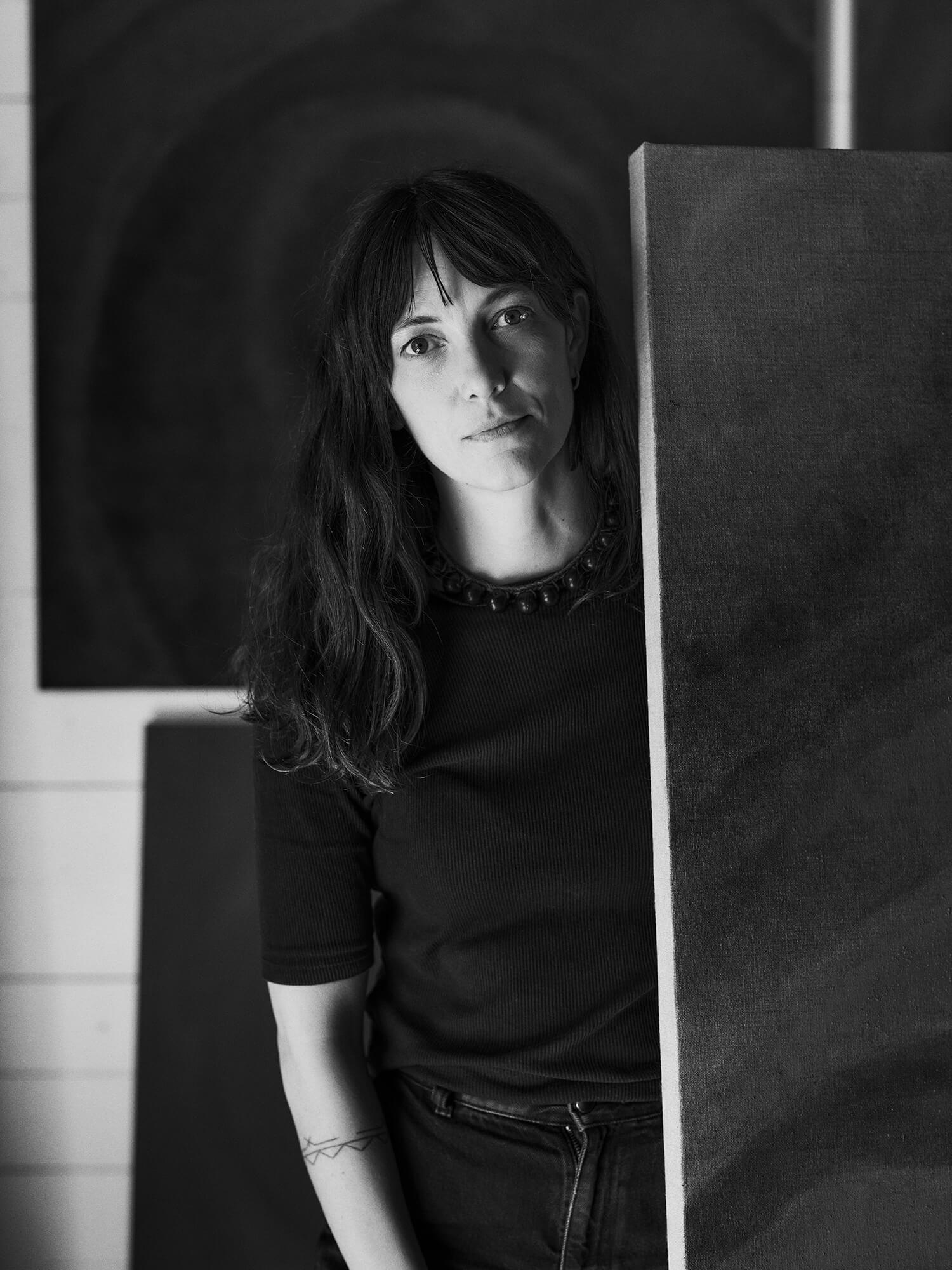
You carry whakapapa in your body before you carry it in your work. When did you first feel that, and what did it ask of you?
I think I felt this most visceral after having my first child and realising that it was my responsibility for her to understand her whakapapa and be able to take that understanding for granted. I didn’t grow up connected to my marae, which is something I have actively looked to change with my own tamariki. It was hard initially, involving breaking down my own personal barriers of fear, but once I got out of my own way it was incredibly easy, like a home coming. I have made my best work since reconnecting with my whānau at Umupuia marae.
Your painting began as something deeply personal, a process of relearning yourself and rediscovering what your body wanted. What did it feel like to pick up a brush in that moment?
It was baby steps, a limited palette of a few oil pastels and a sheet of watercolour paper at a time with clear parameters to follow to allow my mind to get out of the way and let my tinana pace through the motions of a single mark at a time. A prescribed catharsis that was subconsciously rebuilding my wairua as I worked the paper. Once the mark making had moved beyond the rigidity of a frame and geometric constraints, I started to follow the form of my own tinana as a starting point and the process started to really flow. The mahi became anecdotal of what was happening in my life at the time, indeed a time of awakening, exploration and growth.
You've talked about needing to shed rejection you'd drilled into your own body. How did painting become the place you could do that?
Painting at that time had always been my own very personal and sacred practice that I did for myself when I felt driven to do so. Painting for me had no rules, only the limitations of the medium and my own ability. Turning to painting and mark making in a time of grief and rebuilding was an embodied response to processing what was going on around me. I wasn’t making works for anyone else initially, it was a happy by-product that I brought bodies of work home from two stints in Canada and they were lapped up. I think people really connected to what I was channeling in the work.
The work shifted from being about your own body to something larger, indigenous women, sovereignty, the way wāhine bodies have been treated through history. How did that expansion happen?
There was a particular vulnerability I was feeling post separation in a foreign country, putting myself out there and riding the wave of careless self-gratification. During a World Indigenous Peoples' Conference on Education lecture in Toronto I listened to a first nation wāhine talk in depth about the Highway of Tears and the brutality inflicted on indigenous women on this particular stretch of highway in British Columbia, sharing the faces of many of the women murdered from 1969 until that day. I sat there in tears staring at their faces quietly thinking about the shared weight of our tīpuna wāhine and wāhine taketake around the world. I feel this was the wake-up to think about the privilege of my position and my work, and also a silent call to my tipuna whāea to guide me in my practice.
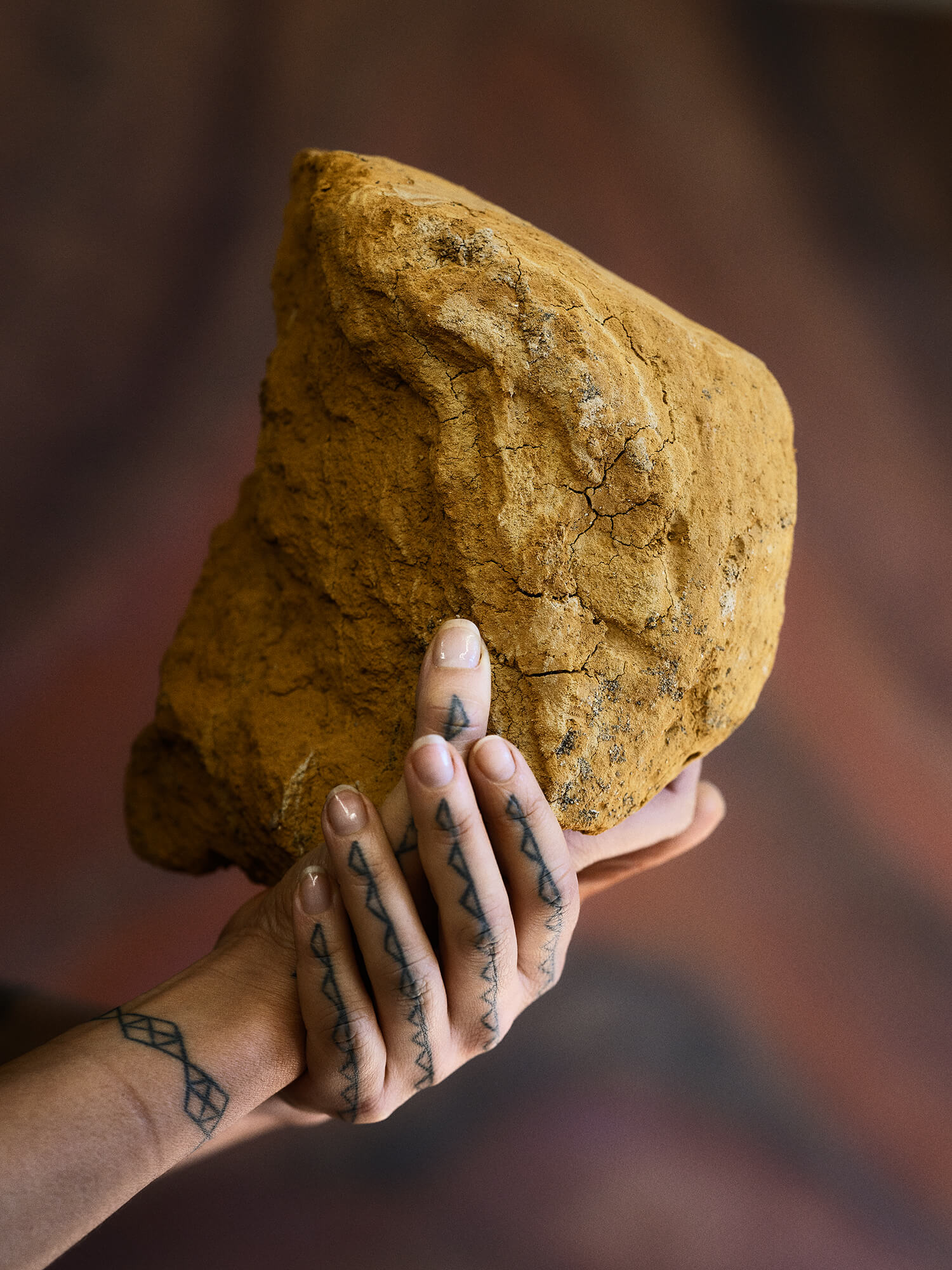
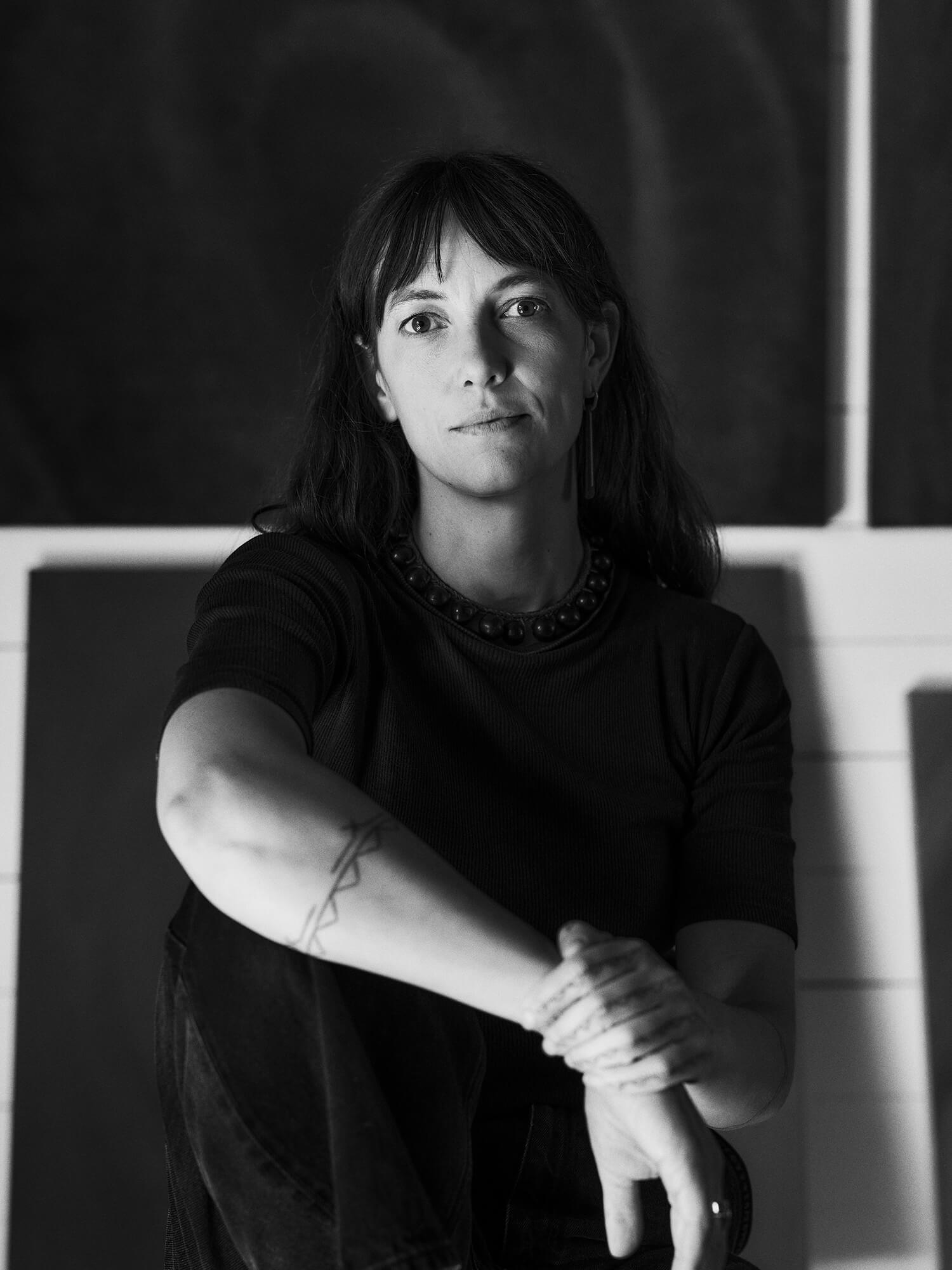
What does it mean to make work about the female body that actively denies objectification?
I feel this is an innate response that many female artists have when exploring the female body, through subverting or challenging the gaze. There was definitely a process of actively objectifying my own body to understand that uncomfortability. Cropping vulnerable and exposed moments to play into the perversion of creating a spectacle. Through this process of isolating the female body into intimate abstractions, the works started to reveal these tensions at play born out of my own personal experiences. The pull between tenderness and vulnerability; charged sensuality and sadness; strength and longing. While my practice has always been about intention, as I was starting to push myself outside of my comfort zone, the work was following suit.
Looking back it was very reflective of the particular time in my life, before 30 where my own gaze was still very internal, and then the shift after having tamariki where that gaze turned outward. This is something my mentor Lynda Simmonds had described to me at Uni and I watched it unfold in my painting practice. There was a shift where I no longer looked to my own life experience as a starting point but rather the whakapapa of the atua wāhine who paved the way for us all.
To really make that divide I used the device of scale, blowing the body up to the point it was no longer read in human scale but rather an endless expanse, a landscape if you wish.
How does honouring atua wāhine show up in the actual making, not just the concept?
That’s my personal practice, the quiet rituals and karakia I do in my studio before making or when collecting rauemi in the taiao. This then filters through to my kōtiro as I share with them the whakapapa of the different toka, uku and onepū we collect together.
Your work is deeply material - there's a tactility to it that feels intentional. Walk us through how you choose what something is made of, and what that process looks like before anything takes form.
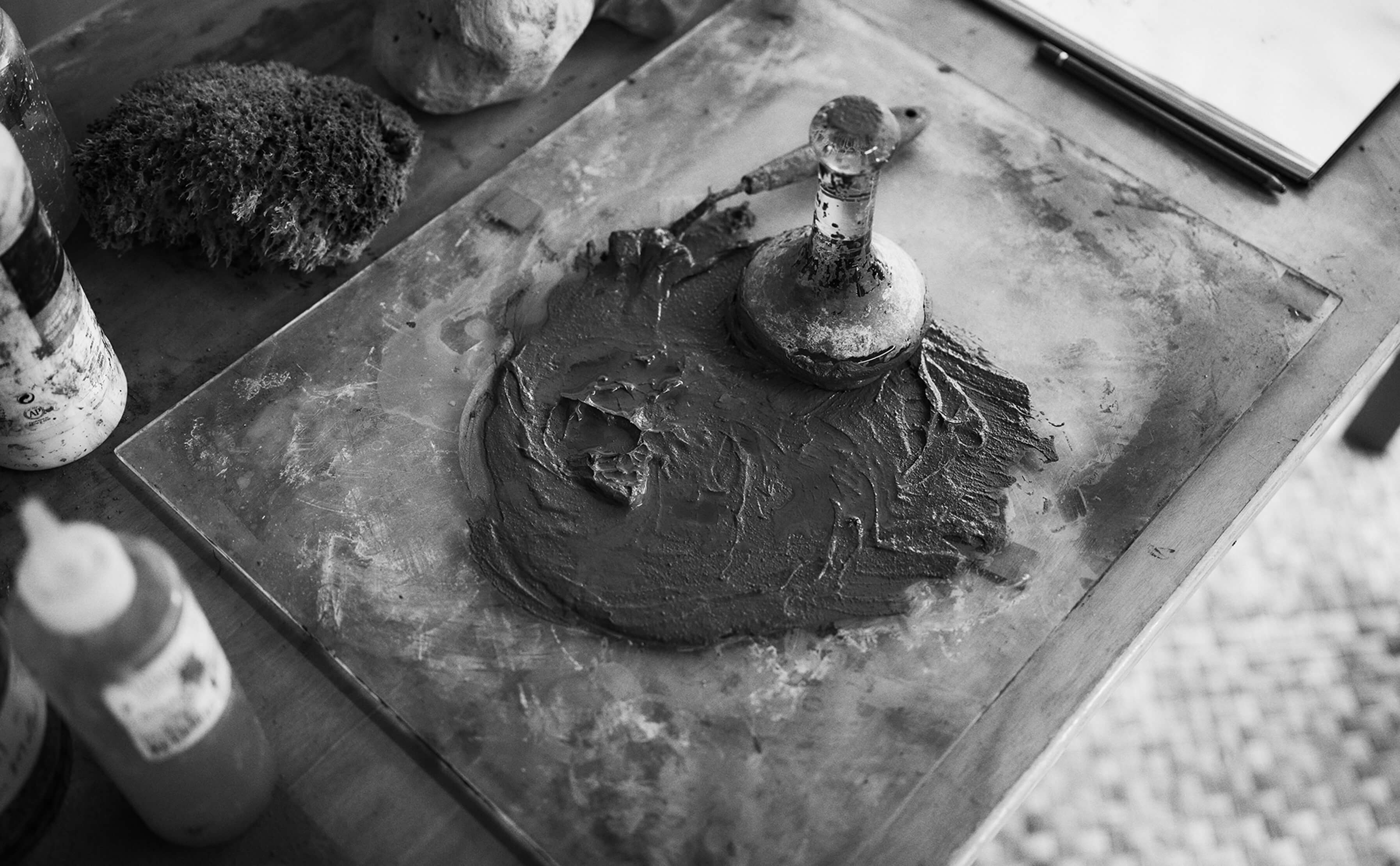
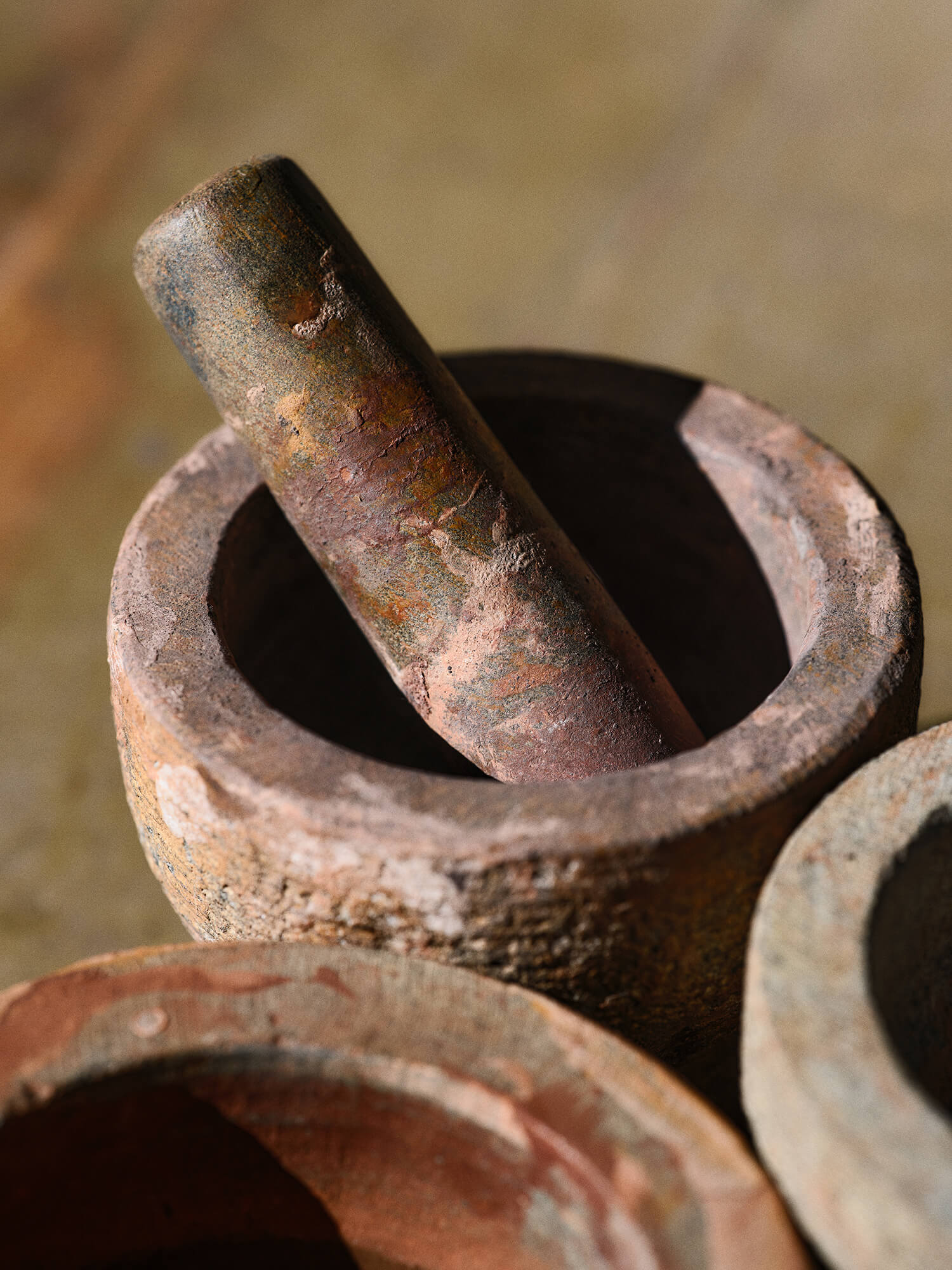
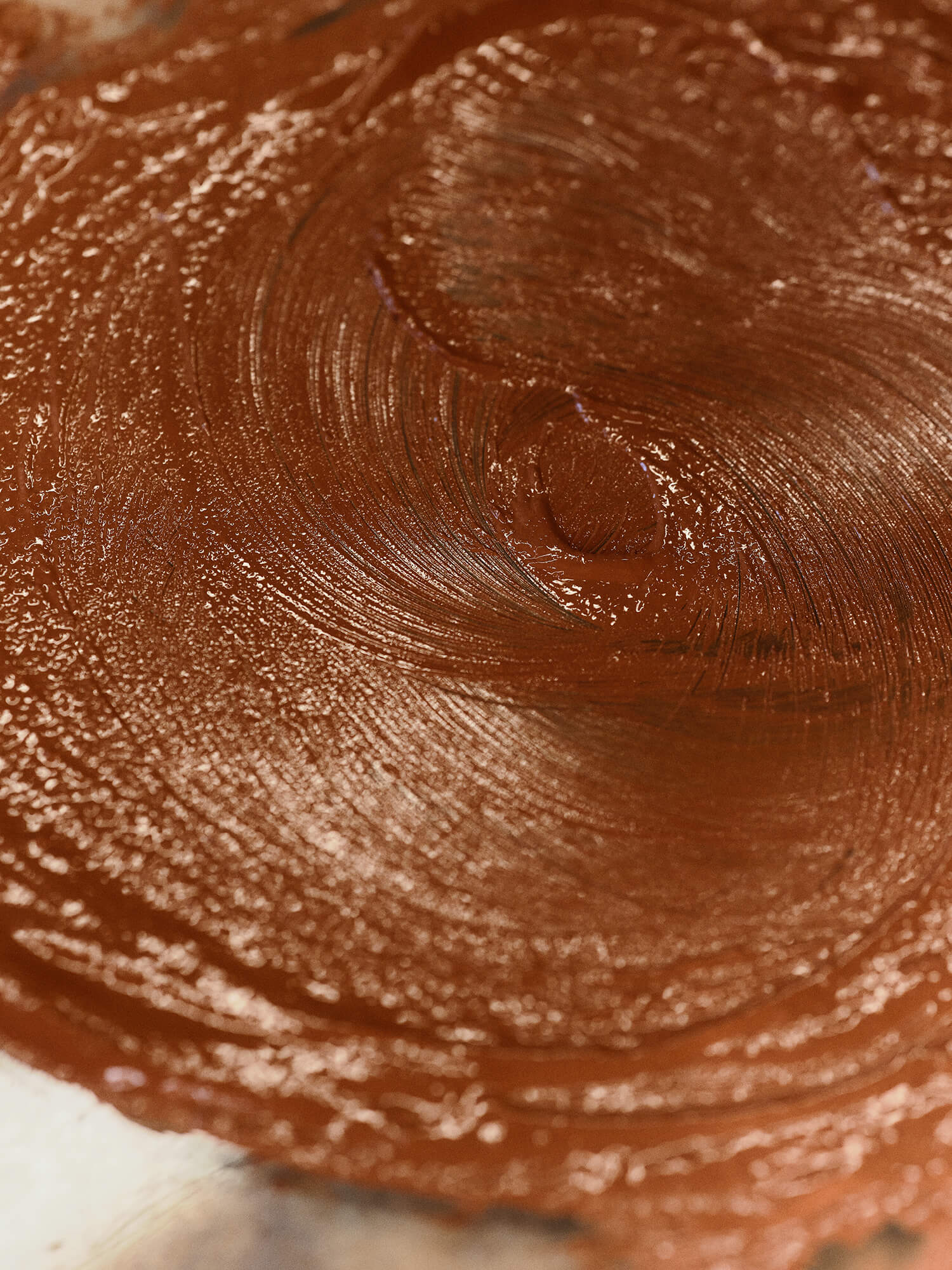
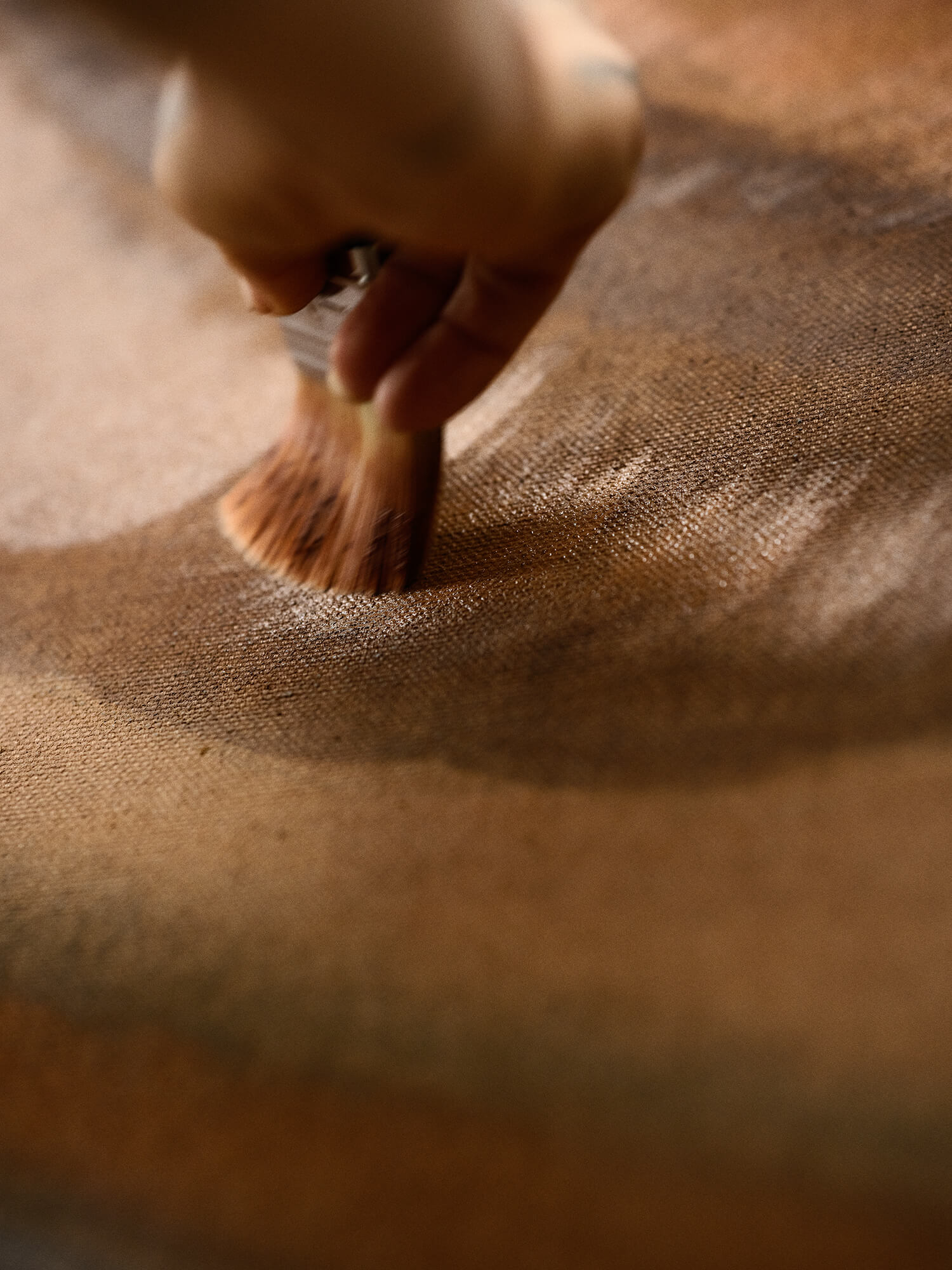
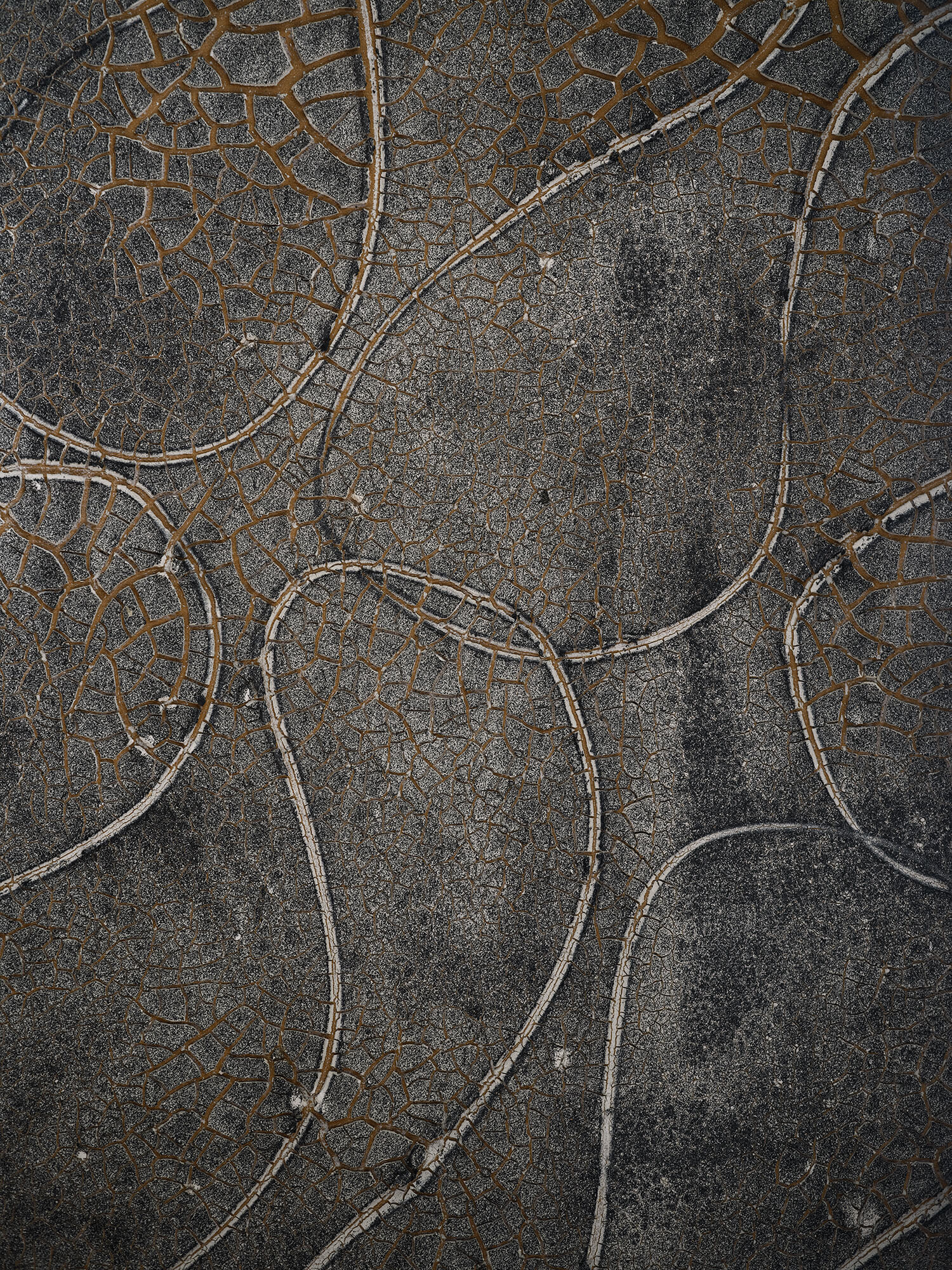
I make versions of waituhi, earth pigment paint following traditional methods of our tūpuna and my own contemporary concoctions. For a water based paint, I typically mix ground kerewhenua or karamea with gum arabic and water - gum arabic is another version of a tree gum, like kauri gum. If I want a more impasto finish, I add an acrylic polymer binder. When working with wet uku or aumoana to create my more textured works I mix the uku with acrylic gel mediums to control how much cracking and texture there is while still maintaining the feeling of uku. I've been experimenting with a cellulose-based binder lately so that it's all plant-based, with pretty interesting results. It's all a process, maintaining a fine art quality on one hand so it stays really strong, while holding on to the innate wairua of the whenua. I love working with onepū collected from the coast of Te Uru. The onepū binds really well with oils like linseed and hardens to a very satisfying consistency while maintaining its sparkle.
You've said painting is catharsis, a way of processing things through your body without having to put words to it. Is that still what it is, or has it become something else over time?
I feel this is still the case, but that catharsis is processing all manner of things like releasing a stressful week with tamariki, or a grind in my architecture mahi or simply leaning in and allowing a dialogue with the material to unfold over the day. The repetitive nature in my mahi, be it processing whenua through grinding and sieving dust, or carving out the top most layer allows me to tune in or out of my thinking brain.
Your process starts with the form of a woman's body - abstracted to a point where it can no longer be seen through the gaze that objectifies. How do you know when you've gone far enough?
This has been a starting point in my practice, from the oil stick days, but it is not the only way I work and my more recent Kurawaka series, particularly the works shown at the 36th Bienal de São Paulo are imagined body scapes, that are neither tinana or whenua but an unfolding continuum of shifting colours and textures. Just like our atua, expansive yet innately personal. I think the idea is that the bar will keep shifting as I continue exploring and pushing the materials I am working with, with no defined end.
How do you know when a painting is finished?
For certain textured works with an uku top surface the work is complete as soon as I have finished carving into the top surface and nothing more can happen once it’s dried. For paintings without a surface texture this can be really tricky and I often sit with works for several years and come back to them and want to keep going. I struggle with restraint. I often don’t like works as soon as they are complete, perhaps something about enjoying the process and the anticipation of how the materials may dry or crack and move; the way uku or kerewhenua dries lighter than the wet paint, so I often put them away for a while. It’s then after coming back to a piece that I can really appreciate it and separate the outcome from any prior expectations I may have had.
You don't keep recipes of your prior mixes. You work intuitively, experimentally, leaving room for error.
This is often the reason why I struggle with certain works initially. Because my recipe making is fairly intuitive, when I try to emulate a similar result in a new work the outcomes are rarely exact as the whenua has its own āhua which comes through in each piece.
Is there a piece that still surprises you when you look at it?
There are so many works I wish I could still look at regularly and I mourn most works that leave my studio. A work Timutimu (papakura) which recently sold at the Aotearoa Art Fair is such a work, in that the aumoana behaved in a way that it never had before. Something about the mix of fine purple papakura dust over the aumoana caused it to dry in a volcanic way, like scoria, while its tuahine Timutimu (kōkōwai) sprinkled with karamea dust behaved very differently. The whakapapa of Papakura was definitely at play. This work sat in my studio for 2 years prior to the fair and the colour shifts from reading as a purple work to a red work depending on the light was wonderful to watch. Quietly wish I kept both these pieces.
You have an exhibition coming to Season Aotearoa Gallery. What does it hold, and what did it ask of you to make it?
This body of work is part of a wider rangahau I'm doing around Kurawaka, which began in 2024 with an invitation from Season to make a body of work alongside whāea Robyn Kahukiwa. She sadly passed that year, before our show. So we decided to put it to rest while her whānau grieved. The works are still here. I've sat with them, reworked a lot of them and they're very much centred around te mana o Kurawaka: the potency of this part of Papatūānuku and what that imbues in us as wāhine Māori. These works are trying to break down the sanitisation of our pūrākau around our atua wāhine, especially the role our female biology plays, which is our superpower: to birth tamariki, to create whakapapa, and to end it. The colonised slant of our pūrākau erased many of these elements from our upbringing. It's about bringing those pūrākau back in their full potency and blurring the lines between the tinana and the whenua - through continual folds of colour like the different layers of the whenua itself. This is the first time I'm sharing this style of mahi in Aotearoa. There's a nervousness to it, but I'm really proud to share these works as well. They're unapologetically where I am right now and come from a really deep place within myself. I feel ready to share them, and feel they speak for themselves.
Your practice sits at the intersection of architecture and art - but do you think one could exist without the other for you, or are they the same impulse expressed differently?
At this moment, I still think so. There are very few Māori architects, and now that my business partner Charlotte Stewart and I are building our own practice, so it feels maumau to let it go. I still feel a huge responsibility there to keep going. The work we're doing in the community is important and feels like we’re just getting started. In architecture you're constantly dealing with other people's needs, money, and expectations. At times I think it would be easier to just do my mahi toi, but I'm trying to build a sustainable practice that I can lean into either. With the hononga and pukenga I have built in architecture I want to do what I can for our hāpori, to push the boundaries and raise the bar - because it's a real fight out there to get things built for iwi Māori with limited pūtea.
I have a balance of painting one to two days a week so I don't get bored of either. I'm always in deficit in both, pulled in both directions.
Architecture and art is not only your creative language. Is there another creative space you moved through?
I spent about ten years exploring acting. It was a real divergence from my comfortable space. At the end of high school I started doing acting classes, thinking it was more for getting ads, just for fun - and it turned into some film and TV work, which was incredibly fun. I was on the books with Red 11 and went on to study at the Neighbourhood Playhouse in New York. In hindsight it was really for the experience, and as much as I enjoyed it, deep down it’s not what I’m cut out for. It was around that time I came back to painting and realised that this is my happy, soulful place - the creative space that serves and fills my cup because it doesn't carry those layers of constant rejection and discomfort that acting does. I also did kapa haka all through high school at Auckland Girls Grammar. Our Kahurangi kapa when I was 4th form were the first all-wāhine rōpū to win at Polyfest, a major highlight.
You chose architecture over fine arts, partly out of fear that if painting became how you made a living you'd lose the love for it. Do you think that instinct was right?
It was pragmatic thinking borne out of both that idea and not wanting to be trapped in a poverty cycle as an artist, having seen that modelled in my upbringing. It was actually my art teacher at high school Marte Szirmay who encouraged me to study architecture and I simply trusted her instinct and dove deep into it for the next 10 years.
I will never know what my art practise would have been like today if I went to art school, probably not a sand and dirt artist, but if it was anything like my architectural training, it took 10 years post my degree to be immersed in kaupapa Māori projects, which is now the focus of my architecture practice Studio Tira.
Not coming through art school meant you never had to position your practice within the canon of Western painting or within the lineage of Māori painters. What has that freedom given you?
Exactly that, creative freedom. Instead I have chosen to align my whakaaro with the community of Māori makers whose mahi is centred around reciprocity, whakapapa and the use of whenua. We are in an abundant time of all things te ao Māori right now, seeing the fruits of the hard fight of our parents generation, (despite the government trying to suppress it), particularly in te ao toi, so it feels like it couldn’t be a better time to be immersed in this mahi.
What drew you to architecture in the first place?
I grew up in a very experimental and creative whare, albeit only half finished and built largely of demo material. My father was an aspiring architect of sorts at the time and I think some of that rubbed off, if at least the desire to learn how things should come together legally. I was surrounded by a creative community growing up and spent a lot of my childhood and adolescence drawing and making things.
You've said painting isn't so much about feeding into architecture, or architecture feeding into painting - it's that painting gives you a space to navigate completely on your own terms. What does architecture not give you that painting does?
Creative freedom and a practice that I really use my body and not a screen.
Is there a building that has moved you the way a great painting can?
Yes there have been many. During my first trip to Japan in 2015 I experienced many contemporary buildings that really blew my mind about space and time. The Teshima Museum was one example that is so reductive in its form and materiality, like being in a concrete womb, that it brings your focus to the sounds of the trees outside bouncing around the walls and water droplets ripping along the undulated floor. As I get older I have come to appreciate the mastery of our whare tipuna much more than when I was younger, when they were largely places we went to for tangihanga. Lyonel Grant’s wharenui Te Ngākau Māhaki has that impact, it’s such a magical space to hear pūrākau and whakapapa.
You and Charlotte Stewart built Studio Tira together - two wāhine Māori shaping space on your own terms. Was this always the plan, or did the studio find you both?
Yeah, I always wanted to start a wāhine led practice. It's just been a case of timing for both of us - we both have small tamariki. My pōtiki is two and her pōtiki is one, so it was the practicality of waiting until we had our tamariki and didn't have the fear of going out on our own in the middle of raising tiny babies. Even though we still have tiny babies, we hit a point where it felt really good. We've managed to take a big project from Monk Mackenzie with us, a papakāinga for wāhine and their tamariki in Massey called He Wāhi Rangimarie. It's quite a large-scale papakāinga and that's been enough for us to carry on with some certainty. At present it's just the two of us. We wanted a practice that supports māmā-life, our other creative ventures, and lets us be flexible and work part time. It's complete idealism for an architecture firm - and we are only five months in, so watch this space.
You've talked about connecting with other Māori women makers - sharing knowledge about using whenua as a medium, feeding off each other's creativity. What does that community give you that working alone can't?
The hononga made with other ringā toi working with whenua through collectives such as The Kauae Raro Research Collective has been an important source of mātauranga in my rangahau of both whenua as a medium and the whakapapa of that whenua. These hononga have also helped me to validate the importance of the mahi we are doing and remind me that this mahi is first and foremost for our own whānau, iwi and communities, especially as I have not come through a typical whare wānanga trajectory. I spend a lot of time working on my mahi toi on my own or with an assistant, however I do share my studio space, Te Ahurewa, with my partner Moko who is a ringa uhi reviving traditional tā moko and the expansive community of Corbans Estate that flows in and out of our space. Because of this I treasure moments in wānanga with other ringa toi, having time to make and tutu in proximity to others, share kōrero and particularly observe their processes.
It feels like it's never been a better time to be a Māori creative. Do you feel that? And what still feels fragile or unfinished?
Absolutely, and it’s really just getting started. There is so much potential and talent in our communities and I’m so warmed to see more and more Māori creatives lean into their Māoritanga and unashamedly create like their wairua depends on it, not holding back in ways our parents generation or their parents had to. I feel I have had to undergo a process of decolonising my thinking post university, which is ongoing considering the context we live and work in in Tāmaki Makaurau.
Can you tell us about your work on the Aesop store at Commercial Bay, and how you translated both brand identity and a sense of place into the design?
Conceptually, we’ve created every material out of uku or reclaimed river tōtara - a natural palette that speaks directly to where the site sits. Commercial Bay marks roughly where the shoreline stood around 1840, so we're right on the cliff face where the shifting colours of the grey hoanga and deep karamea reds seep through the strata.
The fitout’s materiality reflects those natural cliff forms - the way the tide would erode the shoreline from high tide to low tide, referencing a Ngāi Tai whakatauki with the phrase ‘tai timu tai pari’. The interior has been shaped to reflect this slow and soft erosion over time, while quietly nodding to the impact the city has had on our coastline. I have also included a wall painting which I will complete insitu, bringing my two practices together, making it a very bespoke fitout indeed.
How did becoming a mother change the way you work?
I have come to be very precious about my use of time. Even writing this interview feels like it is taking from moments I could be doing other things…like sleeping! The focus of my mahi in architecture is now primarily about serving our communities and elevating te ao Māori in our built environment. And my mahi toi has become a more visceral and imminent experience of exposing the potency of our atua wāhine, their pūrākau and their hononga to the whenua.
What do you hope they inherit from watching you?
I can see it in them already, both my girls love drawing and painting and being in the taiao. Tōmairangi who is only 2 will draw for hours, and Hinauri who is now 6 is a kōtiro of the taiao who loves collecting little treasures and creatures from our haerenga to the moana or ngahere. I do a lot of my gathering with my whānau as well. We use our summer holidays for it, so my tamariki are very much with me while I gather. They're very aware that we're collecting for mahi toi, and they love it. Spades and buckets ready, filling them up alongside me. They've developed this eye for looking for taonga and gathering treasures. I've also run workshops at the puna my kōtiro attend, teaching them how to make pigments and sharing the whakapapa of each whenua as we go. It's nice to see my kōtiro love spending time in the taiao - gathering little anga and trinkets. They both have a love of drawing and making, which was my happy place as a child too.